DuctPro Systems Blog

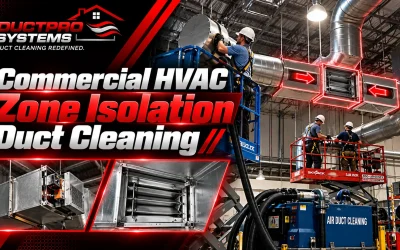
HVAC Zone Isolation Strategy During Professional Duct Cleaning
Most failed commercial duct cleanings don’t fail because the vacuum is too small. They fail because the technician asked one machine to hold negative pressure across an entire building’s worth of open ductwork at once. Air takes the path of least resistance. With...
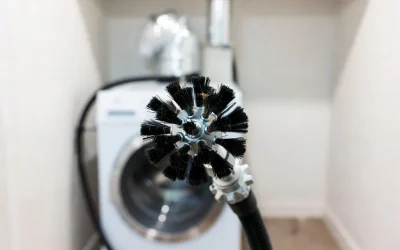
Dryer Vent Cleaning: The High-Margin Add-On Your HVAC Service Tickets Are Missing
Most residential HVAC contractors leave $3,000 to $5,000 per month on the table. Not because they lack the skills. Because they have not structured their service menu around high-velocity, low-labor add-ons. Full-system duct remediation jobs are profitable, but they...
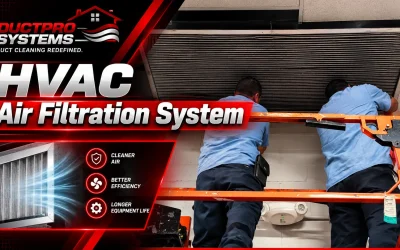
Air Filtration Physics: How Filter Loading Affects HVAC Extraction Performance
A clean filter is not the problem. A loading filter is. The moment particulate starts stacking on the face of the media, resistance climbs, and every fan or vacuum motor pulling through that media fights a steeper curve, minute by minute. Commercial extraction crews...
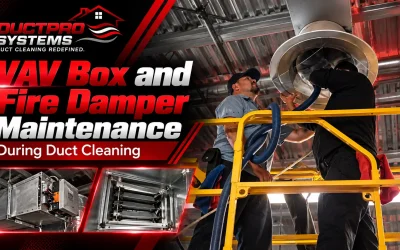
VAV Box and Fire Damper Maintenance: Managing Internal Hardware During Structural Extraction
Commercial duct cleaning involves more than removing accumulated debris from sheet-metal surfaces. VAV boxes, flow-sensing arrays, fire dampers, smoke dampers, actuators, pneumatic control lines, and other terminal components can be located directly within or adjacent...
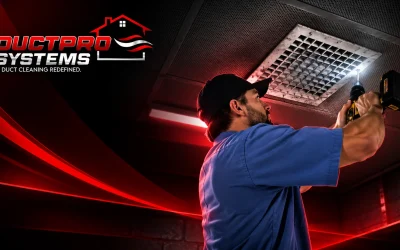
Dirty Ducts and HVAC Efficiency: How Duct Contamination Can Affect System Performance
Dirty ductwork is often blamed when an HVAC system appears to be working harder, delivering less air, or consuming more energy. The reality is more specific. Duct contamination can affect HVAC performance under certain conditions, particularly when deposits contribute...
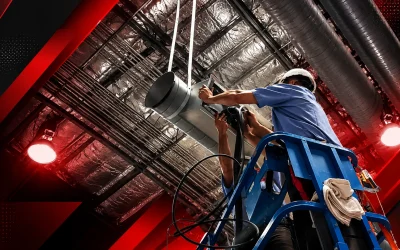
HVAC Airflow Balancing: How Duct Conditions Affect System Balance
HVAC airflow balancing is a measurement-driven process used to determine how much air a system is delivering, identify where airflow differs from the intended design or operating requirements, and make appropriate adjustments. Duct condition can be part of that...
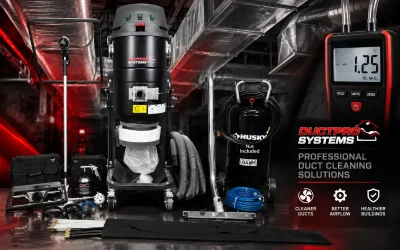
HVAC Static Pressure Analysis: Diagnosing Airflow Resistance in Complex Ductwork
Static pressure is one of the most useful concepts for understanding why a duct cleaning vacuum performs differently from one job to another. It helps explain what happens between the vacuum inlet and the section of duct being cleaned, particularly when the extraction...
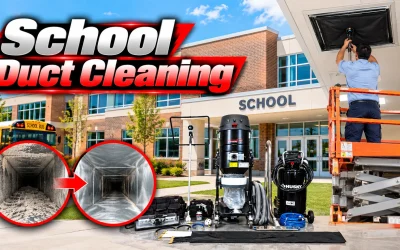
School Duct Cleaning: Managing Institutional IAQ and Compliance in Educational Facilities
Dirty ductwork is easy to see and hard to interpret. A borescope image of dust on a return trunk tells a facility manager something about the system. It does not, on its own, tell them the building has an air quality problem, a ventilation deficiency, or a compliance...
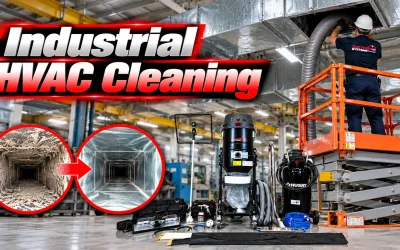
Industrial HVAC Cleaning in Manufacturing Plants: Dust, Airflow, and Safety
IIndustrial HVAC cleaning is not simply commercial duct cleaning with larger ductwork. Manufacturing facilities can present different contamination sources, access constraints, production schedules, and, in some cases, combustible-dust or other hazards that affect how...
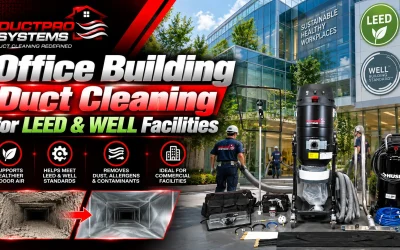
Office Building Duct Cleaning in LEED and WELL Facilities: What HVAC Hygiene Supports, and What It Can’t Prove
Duct cleaning alone does not earn a LEED credit, satisfy a WELL feature, or demonstrate compliance with ANSI/ASHRAE Standard 62.1. Yet in a certified office building, it is often the maintenance task with the most people watching: the chief engineer, the property...
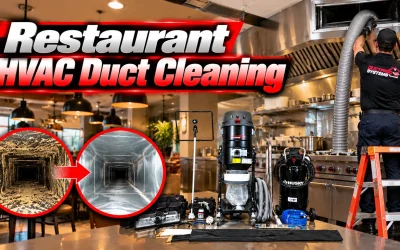
Restaurant HVAC Duct Cleaning: Grease Management & Safety
Restaurant HVAC duct cleaning requires a different approach from cleaning an ordinary residential or commercial air distribution system. A kitchen exhaust system can contain grease-laden deposits, particulate, and other residues that stick to interior surfaces and...
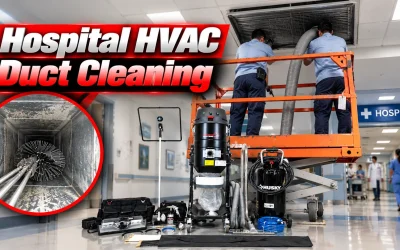
Hospital HVAC Duct Cleaning: Decontamination Protocols for Sterile Environments
Hospital duct cleaning is not mainly a cleaning problem. It is a coordination problem. The duct interiors in a medical-surgical wing look much like the ones in an office tower. The difference is who breathes the air downstream and who has authority over every step of...
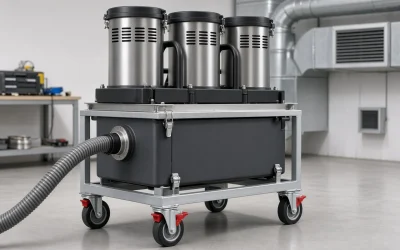
Understanding Vacuum Suction Power in Duct Cleaning: CFM, Water Lift, and What Actually Moves Debris
For professional duct cleaning, vacuum performance cannot be reduced to one number. CFM tells you about airflow. Water lift tells you about the vacuum's ability to work against resistance. Static pressure describes the pressure conditions within the system. Hose...
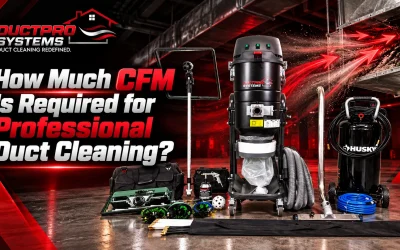
How Much CFM Is Required for Professional Duct Cleaning?
CFM is one of the first specifications contractors look at when choosing a duct-cleaning vacuum. It is also one of the easiest specifications to misunderstand. There is no single CFM number that automatically makes a vacuum suitable for every professional...
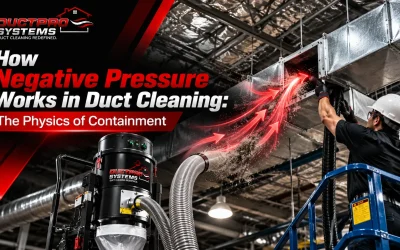
How Negative Pressure Works in Duct Cleaning: The Physics of Containment
Negative pressure is the basic control principle behind source removal in professional duct cleaning. The vacuum does more than pull debris through a hose. When the system is configured correctly, it creates a pressure difference that establishes airflow toward the...
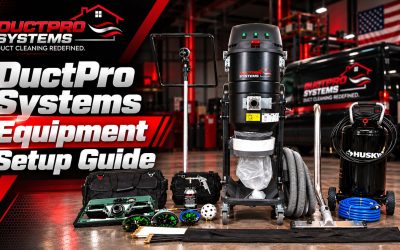
DuctPro Systems Equipment Setup Guide
Professional duct cleaning depends on more than selecting a vacuum and connecting a hose. The way the extraction system is positioned, routed, connected, and checked before operation affects how effectively the equipment can perform under the conditions of the job. A...
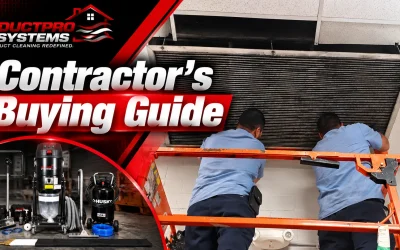
Contractor’s Air Duct Cleaning Equipment Buying Guide: Engineering for ROI
The rig that looks most powerful in the parking lot is often the weakest machine at the register. Duct cleaning is a resistance problem. Debris sits behind elbows, takeoffs, flex runs, and compacted trunk sections, and the only performance that counts is what your...
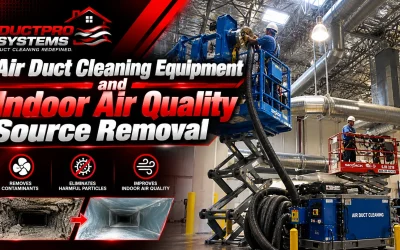
Air Duct Cleaning Equipment and Indoor Air Quality: The Science of Source Removal in Healthy Buildings
Your building’s ductwork is a dust reservoir that gets refilled every day. Every supply trunk, return drop, and plenum in a working HVAC system holds a settled layer of particulate. That layer doesn’t stay put. It waits for the next blower cycle, and then part of it...
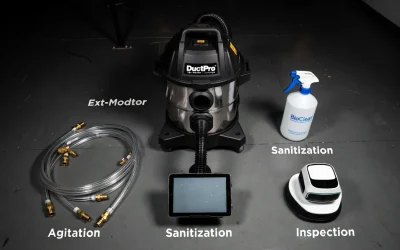
Air Duct Cleaning Hardware: The Four-Pillar System Behind Every Professional Job
A vacuum with strong suction still produces a mediocre result if nothing agitated the duct walls first. Dust and lint bonded to sheet metal do not release on their own just because negative pressure is present somewhere downstream. This is the part of duct cleaning...
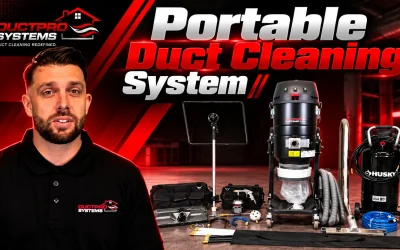
Portable Duct Cleaning System: Truck-Mount Power Without the Constraints
The biggest number on a truck-mount spec sheet is usually the least useful one. Free-air CFM is measured at an open inlet with no hose, no fittings, and no resistance. That is a laboratory condition. A real job site is 140 feet of corrugated flex hose dragged across a...